 TRIPADVISOR
 OUR
OUR EASY TRIP
 INSTANT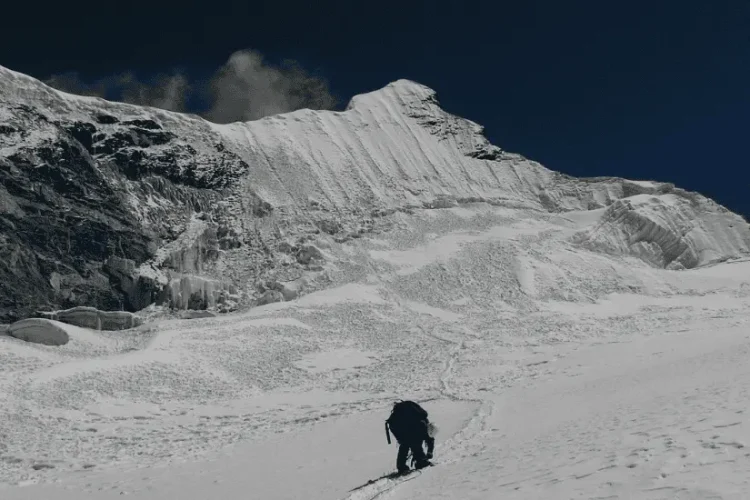
Island Peak Climbing Itinerary & Cost 2026/27 – 22 Days
Posted in 11th Feb, 2026
The Climb That Changes How You See Mountaineering
Every year, thousands of trekkers walk into the Everest region chasing a view. A smaller, more serious group walks in chasing a summit. Island Peak — known locally as Imja Tse — sits at 6,189m and has become Nepal’s most sought-after trekking peak for one simple reason: it delivers genuine high-altitude mountaineering without demanding a decade of climbing experience. If you’re researching the Island Peak Climbing Itinerary 2026/27, you’re already asking the right question.
This itinerary is built for fit trekkers ready to cross the line from trail to technical terrain. If you’ve done Everest Base Camp or the Annapurna Circuit and felt like you wanted more — this is the logical next step.
What you’ll find here is everything that actually matters: a day-by-day 22-day plan, realistic expedition Nepal permit costs 2026, difficulty assessment, and the preparation that separates climbers who summit from those who turn back.
No fluff. Just the climb.
Island Peak Climbing Itinerary 2026/27 Overview
Island Peak stands at 6,189m in the heart of the Everest region, flanked by giants — Lhotse, Makalu, and Ama Dablam dominating the skyline from every approach. The peak earned its name from the early Everest expeditions of the 1950s, when it appeared to rise like an island from a sea of glaciers when viewed from Dingboche. That image hasn’t changed. The scale still stops you cold.
This Everest region peak trek 2026 combines 22 days of structured acclimatization, trail trekking, and technical climbing into a single expedition. According to the Nepal Mountaineering Association, Island Peak consistently ranks as one of Nepal’s most attempted trekking peaks — and the numbers reflect why. The 22-day duration isn’t padding. Every day earns its place, building the physiological adaptation your body needs for a genuine 6,189m summit push Nepal.
The climb pairs a classic Khumbu trail approach with crampons, ice axe, and fixed rope technique on summit day. Spring (April–May) and autumn (October–November) offer the most reliable weather dependent summit window, with experienced teams reporting summit success rates of 70–80% during peak season.
This isn’t a walk with a hard section at the top. It’s a real climb — with a real reward.

Detailed Island Peak Climbing Itinerary 2026/27 – 22 Days Package
Island Peak Climbing 22-Day Itinerary at a Glance
| Day | Location | Elevation | Trek/Activity Hours |
|---|---|---|---|
| 1–2 | Kathmandu | 1,400m | Briefings & gear check |
| 3 | Fly to Lukla → Phakding | 2,610m | 3–4 hrs |
| 4 | Phakding → Namche Bazaar | 3,440m | 5–6 hrs |
| 5 | Namche Acclimatization | 3,440m | Rest + day hike |
| 6 | Namche → Tengboche | 3,860m | 5–6 hrs |
| 7 | Tengboche → Dingboche | 4,410m | 5–6 hrs |
| 8 | Dingboche Acclimatization | 4,410m | Rest + day hike |
| 9 | Dingboche → Chhukung | 4,730m | 3–4 hrs |
| 10 | Chhukung Rest & Exploration | 4,730m | Rest + valley hike |
| 11 | Chhukung → Island Peak Base Camp | 5,087m | 4–5 hrs |
| 12 | Base Camp Training Day 1 | 5,087m | Technical skills |
| 13 | Base Camp Training Day 2 | 5,087m | Summit prep |
| 14 | Base Camp → High Camp | 5,600m | 3–4 hrs |
| 15 | Summit Push → Base Camp | 6,189m | 10–14 hrs |
| 16 | Weather Buffer Day | 5,087m | Rest/contingency |
| 17 | Base Camp → Chhukung | 4,730m | 3–4 hrs |
| 18 | Chhukung → Namche | 3,440m | 6–7 hrs |
| 19 | Namche → Lukla | 2,610m | 6–7 hrs |
| 20 | Lukla Flight Contingency | 2,610m | Buffer day |
| 21 | Fly Lukla → Kathmandu | 1,400m | Flight + debrief |
| 22 | Departure Day | 1,400m | Checkout & farewell |
Arrival in Kathmandu & Expedition Preparation (Days 1–2)
Your expedition begins before you lace a boot. Days 1 and 2 in Kathmandu are operational — not tourism. Your Sherpa guide team conducts full gear checks, validates your Nepal climbing permits, and runs a pre-expedition briefing covering route conditions, team protocols, and emergency procedures.
Don’t underestimate these days. Climbers who skip proper preparation in Kathmandu often pay for it above 5,000m. Gear failures, permit issues, and logistical gaps are infinitely easier to resolve at 1,400m than at Island Peak Base Camp. These 48 hours exist for a reason — use them.
Lukla Flight & Acclimatization Trek (Days 3–10)
The Lukla flight is one of the most dramatic airport approaches in the world — a steep, short runway carved into a Himalayan hillside at 2,610m. Build Lukla flight contingency days into your planning. Weather cancellations are common, particularly in shoulder seasons, and missing your trek start cascades through every day that follows.
From Lukla, the route climbs steadily through Phakding and into Namche Bazaar — the beating heart of the Khumbu. Your first acclimatization rest day happens here at 3,440m. Don’t skip the recommended day hike above town. Climbing high and sleeping low isn’t a guidebook cliché — it’s the physiological foundation your summit depends on.
The trek continues through Tengboche and into Dingboche at 4,410m, where a second full acclimatization day allows your red blood cell count to catch up with your ambition. From Dingboche, the Chhukung base camp route follows the Imja Khola valley east — quieter, rawer, and increasingly serious in atmosphere. By the time you reach Chhukung at 4,730m, the Himalayan scale starts to feel personal.
Island Peak Base Camp & Pre-Climb Training (Days 11–13)
The trail from Chhukung to Island Peak Base Camp at 5,087m takes four to five hours across glacial moraine. Tented accommodation defines life from here — no tea houses, no hot showers, no creature comforts. Just your tent, your team, and the mountain above you.
These three days are where the real preparation happens. Your Sherpa guide pre-climb skills sessions cover everything a technical first-timer needs: rope management, harness fitting, crampon attachment, and self-arrest technique. If you’ve never worn crampons on live ice or swung an ice axe under load, these sessions are non-negotiable. Experienced Sherpa guides run them with patience and precision — but pay attention. What you learn here is what keeps you safe above 5,600m.
Summit Push & Descent Phase (Days 14–20)
High Camp at 5,600m is your final sleep before the summit. You won’t sleep much. The alpine start — typically midnight to 1am — is deliberate. Summit teams need to reach the top and descend before afternoon winds and softening snow make the upper mountain dangerous.
The route from High Camp moves through glaciated terrain before hitting the technical sections that define this climb. Fixed ropes manage the steepest ground, including the crevasse crossing sections that require focus and clean footwork. The snow headwall scramble above the glacier is where many first-timers feel the full weight of what they’ve taken on — a sustained, steep push on firm snow with exposure on both sides.
The Yellow Tower — a rocky step near the summit ridge — demands careful movement and trust in your gear. From there, the summit is close. The 10–14 hour summit roundtrip from High Camp is a genuine full-day commitment at altitude, and the 3,349m altitude gain across the entire expedition tests every physiological adaptation you’ve built over the preceding weeks.
Days 16 and 17 include a built-in weather buffer — critical given the weather dependent summit window that governs success on any Himalayan peak. If summit day gets pushed, these days absorb the change without wrecking your flight schedule. From base camp, the descent retraces the approach through Chhukung, Namche, and back to Lukla — a different journey emotionally, but no less demanding on tired legs. For adventurers looking for a peak climbing experience over 20 days, Mera Peak Climbing is an excellent choice.
Island Peak Climbing Cost 2026/27 Explained
Most climbers budget between $2,500 and $4,000 USD for a fully guided Island Peak Climbing Itinerary 2026/27 . That range isn’t vague — it reflects real variables. A private guided climb with a high Sherpa-to-client ratio sits at the upper end. A small group expedition of four to eight climbers brings that figure down significantly without compromising safety or experience quality.
According to Himalayan Database, one of the most authoritative records of Himalayan expedition history, Island Peak has seen consistent growth in annual attempts — driven largely by its accessibility as a first 6,189m summit push Nepal without the logistical complexity of higher-grade objectives. Your expedition Nepal permit costs 2026 include the NMA climbing permit, Sagarmatha National Park entry fee, and the Khumbu Pasang Lhamu Rural Municipality charge — all mandatory, all non-negotiable.
Here’s where your budget actually goes:
- Permits and peak fees — NMA climbing permit, national park entry, local municipality fee
- Sherpa guide and porter services — Lead climbing Sherpa, support porters, high camp assistance
- Flights, meals, and accommodation — Lukla return flights, teahouse board on trek, tented base camp setup
- Optional gear rental and insurance — Crampons, ice axe, harness, helmet, comprehensive travel and evacuation cover
Season timing moves the needle too. Spring (April–May) commands premium pricing due to demand. Autumn (October–November) offers comparable conditions, occasionally at better rates for flexible groups.
What you pay for, ultimately, is margin for error. On a 6,189m summit push, that margin matters.
Here’s the H2 permits section, built to spec:
Required Permits for Island Peak Climbing 2026/27
Getting your paperwork right isn’t bureaucratic busywork — it’s what keeps you on the mountain legally and safely. Three separate permits govern every Island Peak expedition, and your operator handles the application process, but you need to understand what you’re carrying.
The Nepal Mountaineering Association climbing permit is your primary authorization. Issued directly by the NMA in Kathmandu, it grants legal access to attempt Imja Tse and must be obtained before your trek begins. For 2026/27, the fee sits at $250 USD per climber for spring and autumn seasons.
The Sagarmatha National Park entry permit covers your entire time within the park boundary — from Monjo on the approach trek through to your descent. Every climber and trekker entering the Khumbu region carries this document. It’s checked at multiple points along the trail.
The Khumbu Pasang Lhamu Rural Municipality permit is a local governance fee, relatively modest in cost, but mandatory and verified on entry into the region.
All three permits require a valid passport with at least six months remaining validity, two recent passport-sized photographs, and completed application forms. Your expedition operator typically consolidates this process in Kathmandu on Days 1 and 2 — another reason those arrival days carry real operational weight.
Best Time for Island Peak Climbing in 2026/27
Timing an Island Peak expedition isn’t a preference — it’s a strategic decision. The mountain is entirely weather dependent, and your summit window is narrower than most first-time Himalayan climbers expect.
Spring (March–May) is the premier season. Temperatures are climbing, visibility is sharp, and the mountain sees its highest concentration of guided teams — which means well-maintained fixed ropes and established high camp infrastructure. April and early May represent the sweet spot before the monsoon builds from the south.
Autumn (September–November) runs a close second. Post-monsoon skies deliver some of the clearest conditions in the Himalaya. October is the standout month — stable, cold, and visually stunning. Temperatures drop more sharply than spring, so layering strategy matters more.
Monsoon season (June–August) brings persistent cloud cover, saturated trails, and genuine avalanche risk on the upper mountain. Most operators don’t run expeditions during this window for good reason.
Winter (December–February) is technically possible but brutally cold above 5,600m, with high winds and severely limited summit push opportunities. Unless you’re specifically seeking a winter ascent challenge, this season doesn’t serve most climbers’ goals.
Commit to spring or autumn. Everything else is compromise.
Difficulty Level & Technical Challenges of Island Peak
Island Peak carries an Alpine PD+ climbing grade — Peu Difficile Plus in the French grading system. That classification sits above a straightforward glacier walk but well below the technical demands of objectives like Ama Dablam or Mera Peak’s harder variants. For context, PD+ means you’ll encounter genuine technical terrain requiring competent use of crampons, ice axe, and fixed rope systems. It does not mean you need years of alpine experience to attempt it.
What makes this climb genuinely challenging is the cumulative weight of the 3,349m altitude gain across the expedition. Your body adapts through the acclimatization trek, but summit day still arrives at the end of weeks of sustained physical output. Fatigue compounds everything above 5,600m.
According to The British Mountaineering Council, proper technical preparation and guided instruction are critical factors in summit success on PD+ objectives for first-time alpine climbers — a standard this itinerary is specifically designed to meet.
The three sections that demand the most focus on summit day:
- Glacier travel with rope teams — Crevasse terrain requires disciplined rope spacing and constant awareness
- Yellow Tower fixed rope ascent — A steep, rocky step requiring confident movement under load and altitude
- Exposed summit ridge — Narrow, wind-exposed, and unforgiving of careless footwork
Challenging? Absolutely. Beyond reach for a fit, prepared climber? Not even close.
Training & Preparation for Island Peak Summit
The climbers who turn back on Island Peak rarely fail because of the technical sections. They fail because they underestimated what sustained effort at altitude actually feels like in a body that isn’t ready for it. Preparation isn’t optional — it’s the climb before the climb.
A serious preparation timeline runs 4 to 6 months minimum. That window allows genuine cardiovascular adaptation, functional strength development, and the kind of back-to-back endurance capacity that summit day demands. A single long hike on weekends won’t build it. Consistent, progressive loading will.
Your Sherpa guide pre-climb skills sessions at base camp cover the technical fundamentals — crampons, ice axe technique, rope management, and harness use. But arriving at base camp already familiar with that equipment makes a measurable difference. It frees your mental bandwidth for the mountain itself.
Build your preparation around four pillars:
- Cardio with weighted pack — Uphill hiking or stair sessions carrying 10–15kg, three to four times per week
- Back-to-back training days — Consecutive long effort days that simulate expedition fatigue
- Altitude exposure hikes — Any opportunity above 3,000m accelerates your acclimatization response
- Technical skill familiarity — Indoor climbing, crampon practice, or a guided alpine day course before departure
Show up strong. The mountain rewards preparation with summit views.

Is Island Peak Worth It in 2026/27? Who Should Book
Island Peak is worth every metre of effort — for the right climber. The ideal candidate has strong trekking legs, a history of multi-day high-altitude walking, and genuine motivation to step into technical mountaineering for the first time. Everest Base Camp or Annapurna Circuit veterans who felt the pull of something harder are exactly who this climb was built for.
Aspiring Ama Dablam or 7,000m climbers use this expedition as a proving ground — and rightly so. The Alpine PD+ experience, glacier travel, and high-altitude physical output directly translate to bigger objectives.
Who should reconsider? Anyone expecting a hard trek with crampons at the top. Imja Tse demands genuine fitness, technical respect, and mental resilience. Casual trekkers without a structured preparation base will find the upper mountain unforgiving.
A fully guided expedition with an experienced Sherpa guide team doesn’t just improve your safety margins — it measurably increases your summit success rate. On a weather dependent summit window, having professional judgment alongside you isn’t a luxury. It’s the difference between summit and turnaround.
Written by Pemba Sherpa High-Altitude Mountaineering Guide | 15+ Years in the Khumbu Region | 200+ Successful Island Peak & Everest Region Expeditions
Pemba has guided climbers from over 30 countries across Nepal’s most demanding trekking peaks. From first-time 6,000m summiteers to seasoned alpinists preparing for Ama Dablam and beyond, his expeditions are built on one principle: preparation wins summits. When he’s not on the mountain, he’s helping the next generation of climbers understand exactly what they’re getting into — and exactly how to get to the top.
Your Island Peak Climbing Itinerary 2026/27 Starts Here
Island Peak rewards those who respect it. The 22-day structure exists because acclimatization can’t be rushed. The cost range reflects what genuine safety and expert guidance actually costs. The preparation timeline is serious because the mountain is serious.
What this Island Peak Climbing Itinerary 2026/27 gives you is clarity — a proven route, a realistic budget, and an honest picture of what stands between you and a 6,189m summit in the Everest region. First-time technical climbers complete this expedition every season. Not because it’s easy — because they prepared, trusted their team, and committed fully.
You’ve done the research. You’ve read the itinerary. You know the costs, the permits, the training, and the challenge.
The only question left is whether you’re ready to stop reading about it and start climbing.
Ready to Start Your Island Peak Climbing Itinerary 2026/27?
Spring and autumn 2026 expeditions fill fast — and for good reason. Island Peak remains the most accessible gateway into serious Himalayan mountaineering, and guided spots at the right Sherpa-to-client ratio are genuinely limited. If you’ve been sitting on this decision, now is the time to move. Reach out today for a personalised Island Peak Climbing Itinerary 2026/27 consultation — itinerary, costs, group availability, and everything you need to commit with confidence. Your 6,189m summit is twelve months away. Let’s make it happen.


