 TRIPADVISOR
 OUR
OUR EASY TRIP
 INSTANT
Everest Base Camp Trek: Expectations vs the Brutal Reality of the Trail
Posted in 18th May, 2026
Some people train for months, show up completely confident, and still get absolutely humbled by day three. Meanwhile, others with zero hiking experience finish strong simply because they listened to their body and refused to rush.
So what’s the truth?
The Everest Base Camp trek is hard. Really hard. But it’s probably not going to break you for the reasons you think.
Forget What You’ve Seen in Movies
Most people picture Everest and immediately think of climbers in full gear, dangling off ice walls. That’s not this. You don’t need ropes. No crampons. No mountaineering skills whatsoever.
What you do need is solid leg endurance, a stubborn mindset, and genuine respect for altitude. That last one? Most people skip it. And that’s where things go wrong.
This is a long walk. A really long walk. Around 130 kilometers round trip from Lukla, with over 8,000 meters of total elevation gain and loss. Some days you’re walking 5 hours. Other days closer to 7 or 8. Your body takes a beating every single day, and then you wake up and do it again.
That’s the part people don’t fully grasp until they’re out there.
The Sections That Will Test You the Most
Lukla to Namche Bazaar — Day 1 and 2
This early stretch tricks people. You look at it on a map and think, okay, that’s not so bad. Then you’re on the actual trail, climbing over 600 meters on stone steps that seem to go on forever, and your legs are done before you’ve even reached Namche.
It’s one of the toughest days on the whole route. And it comes right at the start, before your body has had any time to adjust. Take it slow here. Don’t try to keep up with anyone else. Just move at your own pace and keep moving.
Namche to Dingboche — Days 3 and 4
After Namche, things get a bit more manageable in terms of terrain. The trail passes through pine forests and small villages, and the views start opening up. But you’re getting higher with every step, and you’ll start feeling the air thinning out.
Headaches become common around here. That’s normal. Slow down, drink more water, and don’t push too hard just because you’re feeling okay.
Dingboche to Base Camp — Day 5 through 7
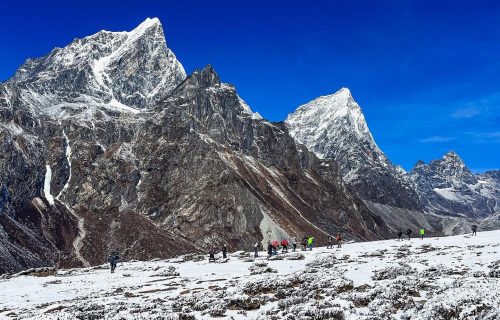
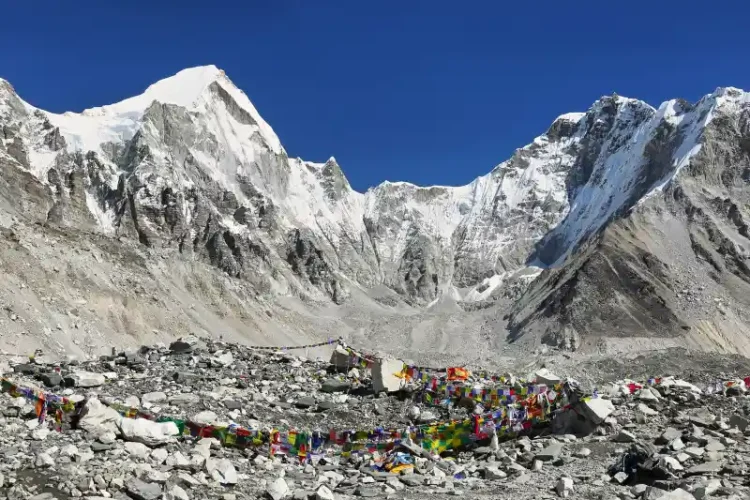
This is where it gets raw. The landscape turns rocky and barren. There are no more green forests or cozy-looking villages. Just stone, dust, and the glacier moraine underfoot. Every step takes more out of you than it should. You’ll be breathing harder just standing still.
Base Camp itself sits at 5,364 meters. The air up there has roughly half the oxygen of what you breathe at home. Your lungs are working overtime just to keep you upright.
Kala Patthar — Day 8
Most people do this as an early morning hike before heading back down. Starting in the dark, cold, the final push to 5,555 meters is steep and relentless.
But the sunrise from up there is one of the most beautiful things a person will ever witness. Everest right in front of you, glowing orange in the early light. Every painful step is worth it.
Here’s a Simple Day-by-Day Overview
| Days | Route | Difficulty | What Makes It Hard |
|---|---|---|---|
| 1–2 | Lukla to Namche | Hard | Non-stop steps, burning legs |
| 3–4 | Namche to Dingboche | Moderate to Hard | Altitude starting to hit |
| 5–7 | Dingboche to Base Camp | Hard | Thin air, rocky ground |
| Day 8 | Kala Patthar Sunrise | Very Hard | Freezing cold, steep, early start |
| Return | Base Camp to Lukla | Moderate | Knees take a serious beating going down |
Can a Normal Person Actually Do This?
Yes, Absolutely.
Thousands of people with no serious hiking background complete this trek every single year. Office workers, teachers, people in their 50s and 60s, first-time trekkers. It happens all the time.
They didn’t just book a flight and show up hoping for the best.
Give yourself 3 to 4 months of proper training, and you’ll be in a solid position. You don’t need to be an athlete. You just need to put in consistent work.
Here’s what actually helps:
- Do long weekend hikes with a backpack. Start with a light pack and slowly add weight up to 5 or 8 kilograms. Shoulders and hips need to get used to carrying a load.
- Climb stairs obsessively. Stairs at work, stairs at home, stairs wherever you can find them. Quads and calves will be doing a lot of work on this trek.
- Do back-to-back hiking days. Going out for one big hike is good. Going out for two or three consecutive days is better. It teaches your body to recover while still moving.
- Get a check-up before you go. Specifically ask your doctor to check your heart and lungs. Altitude puts extra stress on both.
- Start using trekking poles early. Don’t wait until you’re on the trail. Practice with them so they feel natural. On the descent, especially, they’ll save your knees.

Altitude Is the Real Boss Up Here
Let’s talk about the thing that actually stops people. Not sore legs. Not steep climbs. Altitude sickness.
At Base Camp, the air pressure is so low that blood simply can’t carry oxygen the way it normally does. The body has to work harder for everything. Climbing stairs. Eating. Even sleeping.
The key to dealing with it is simple in theory but hard in practice. Go slow. Seriously, slower than you think you need to go. The mountain will still be there tomorrow.
Good trek itineraries build in full rest days at Namche Bazaar (3,440m) and Dingboche (4,410m). These aren’t lazy days. They’re doing important work. The body is quietly building more red blood cells and learning to function at lower oxygen levels.
The old trekking rule says it perfectly. Climb high, sleep low. Hike up to a higher point during the day, but always come back down to sleep at a lower elevation. This rhythm is what keeps people safe.
Normal stuff trekkers will probably feel at altitude:
- A dull headache, especially in the mornings
- Feeling puffed out after any kind of exertion
- Sleeping badly, even when completely exhausted
- Not feeling hungry even though the body needs fuel.
The warning signs that cannot be ignored:
- A severe headache that painkillers won’t touch
- Vomiting or feeling like it’s coming
- Feeling dizzy or confused
- Extreme tiredness that feels different from normal fatigue
If any of those warning signs appear, stop going up. If they get worse, go down immediately. No view is worth risking your life over.
Drink 4 to 5 liters of water every day. Keep checking urine color – pale yellow means hydration is on track, dark means drink more. Eat regularly even without appetite because the body is burning somewhere between 4,000 and 5,000 calories a day just to keep going at that elevation.
Some trekkers use a medication called Diamox to help with acclimatization. It can work well, but always talk to a doctor before the trip, not when already on the trail.
What Life Is Actually Like Up There
The weather and seasons
Spring, meaning March through May, is warmer and great for wildflowers, but clouds can roll in and cut off those views you’ve been dreaming about. Snow at higher elevations is also possible.
Autumn, from September through November, gives the best visibility and crispest views. Nights get brutal, though. Temperatures can drop to minus 10 degrees Celsius and lower once above 4,000 meters.
The teahouses
Don’t expect comfort. Teahouses are basic mountain lodges — simple twin rooms with thin mattresses, no heating, and shared bathrooms that get more basic the higher you go. Above a certain point, it’s squat toilets and no running hot water.
A good sleeping bag rated to minus 10°C is not optional. It’s survival gear up there. Hot showers exist at lower elevations but cost extra. Phone charging depends on solar power and doesn’t always work when needed.
Food on the trail
- Dal Bhat is the go-to meal. Rice, lentils, and vegetables with unlimited refills. It’s warm, filling, and gives steady energy. Eat it as often as possible.
- Don’t eat meat above Namche. Refrigeration is unreliable at altitude, and food poisoning at 4,500 meters is a nightmare situation.
- Bring personal snacks. Nuts, chocolate, protein bars, dried fruit — whatever works for you. There will be days when appetite disappears, but the body still needs something.
- Drink hot tea, ginger lemon tea especially. It warms you up, keeps you hydrated, and soothes the dry, scratchy throat that comes with breathing cold mountain air all day.
- Bring a buff or scarf for the face. The Khumbu cough is a real thing. Dry air irritates the airways, and people end up coughing for weeks without proper protection.
What to Pack ? The Honest Version
Don’t overpack. Every extra gram matters when climbing at altitude.
- Trekking boots that are already broken in. Brand new boots will destroy your feet. Wear them for months before the trip.
- Trekking poles – non-negotiable for the descents
- Warm base layers, a fleece mid-layer, a windproof shell, and a proper down jacket
- A headlamp with extra batteries, because some days start in complete darkness
- Good sunglasses with UV protection — the sun at altitude is intense and can damage eyes quickly
- A heavy sleeping bag with a liner for extra warmth
- Blister plasters, basic painkillers and any personal medications
- Two or three reusable water bottles
For a complete list of trekking gear and clothing recommendations for Nepal, check out our detailed Nepal Trekking Equipment Guide.
Why Having a Good Guide Actually Matters
Some people try to do this trek independently to save money. That’s understandable. But a genuinely experienced local guide brings something no guidebook can replicate.
They watch the trekkers around them. Every day, they’re looking at how people are walking, talking, and breathing. They carry a pulse oximeter and check oxygen saturation regularly. If numbers are dropping before anyone has noticed, the guide has already seen it.
They also know when to push gently and when to pull back. That judgment call whether to keep going or take an extra rest day can be the difference between a successful summit and a helicopter evacuation.
Himalayan Trip Nepal is one of the most trusted local operators running this route. Their guides are Sherpas and local Nepali trekking experts who have done this trail more times than they can count. They carry emergency oxygen, they look after their porters properly, and they handle all the logistics so trekkers aren’t stressed about permits and flights on top of everything else.
Check out their itineraries and full details at Himalayan Trip Nepal. Having the right team behind you genuinely changes the whole experience.
So, Is It Worth It?
Every single bit of it.
Your legs will ache, you won’t sleep despite being exhausted, and you will question why you even signed up.
And then you’ll round a corner, and Everest will be right there. Or the sunrise from Kala Patthar will light up the whole Himalayan range in gold. Or Base Camp will finally come into view, and the realization hits you actually made it.
Regular people do this trek every year. Not elite athletes. Not professional climbers. Just people who prepared well, went slowly, and refused to quit.
Prepare properly. Go slow. Drink more water than seems necessary. Trust the process.
One step at a time gets you all the way there.
Planning a trip in Nepal?
Explore curated trekking and tour packages, or customize your own itinerary.
Explore TripsCustomize Trip