 TRIPADVISOR
 OUR
OUR EASY TRIP
 INSTANT
White Water Rafting in Nepal: Which River Should You Choose?
Posted in 21st Apr, 2026
Most people arrive in Nepal with trekking on their mind. The rivers don’t cross their thoughts until someone mentions the Bhote Koshi and describes what it feels like to drop into a Class V rapid with a 3,000-metre wall of rock on both sides.
Then the plans change.
Rafting in Nepal is not a footnote to a Himalayan trip. For a lot of travelers, it becomes the part they talk about most when they get home. The rivers here are fed by snowmelt from some of the highest peaks on earth. They are fast, cold, and in certain stretches, genuinely wild. The scenery around them is the kind that makes you forget you are in the middle of a rapid until the water is already over your head.
But Nepal has several rafting rivers, and they are not all the same. Choosing the wrong one for your experience level or travel style can leave you either bored or out of your depth. This guide breaks down the main rivers, who they suit, and what to expect on each one.
Why Nepal Is One of the Best Places in the World for Rafting
Geography does most of the work. Nepal sits between the Tibetan plateau and the flat plains of northern India, and nearly every river in the country makes that same dramatic drop in a very short distance. Rivers that start as glacial streams at 5,000 metres reach the lowlands within hours. That descent creates a gradient, and the gradient creates rapids.
Add to that the fact that Nepal’s rivers flow through remote gorges, forested valleys and terraced hillsides that most roads don’t reach, and you have the conditions for a rafting experience that is genuinely different from most of the world. The rivers are also well-established for rafting. Safety standards, licensed operators and experienced local guides have developed over decades.
Many travelers who come for rafting also pair their trip with a broader Nepal experience. The Kathmandu Pokhara Chitwan Tour offered by Himalayan Trip Nepal is one of the most popular ways to combine river adventures with cultural landmarks and wildlife — all in a single well-planned journey.
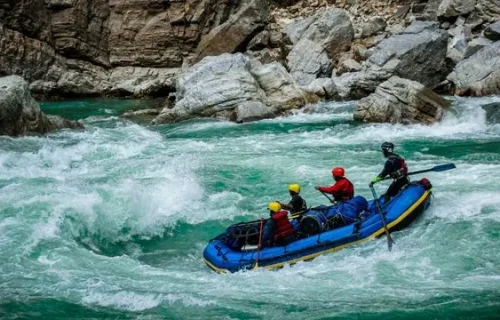
The Rivers: An Honest Breakdown
The Trishuli
The Trishuli is where most people start their rafting in Nepal, and for good reason. It runs alongside the Prithvi Highway between Kathmandu and Pokhara, which makes it the most accessible river in the country. Before you hit the water, a skilled guide will coach you through the paddle orders. Most people get the rhythm by the time the first large rapid arrives.
- Best season: September to November and March to May.
- Difficulty: Class III to IV.
The Bhote Koshi
If the Trishuli is where you learn to raft, the Bhote Koshi is where you find out what rafting can actually feel like. The river drops around 80 metres per kilometre in its steepest sections, which makes it one of the steepest commercially rafted rivers anywhere in the world. The rapids are continuous, powerful and relentless.
- Best season: October to November and March to May. Avoid during the monsoon.
- Difficulty: Class IV to V.
The Sun Koshi
Where the Bhote Koshi is short and violent, the Sun Koshi is long and varied. A full run covers around 270 kilometres over eight to ten days, starting northeast of Kathmandu near the Tibetan border and ending near the border with India. It is regularly listed among the top ten rafting expeditions in the world.
- Best season: October to November. Avoid the monsoon season entirely.
- Difficulty: Class III to V.
The Karnali
The Karnali is the wildest and most remote rafting experience Nepal offers. It flows through far western Nepal, a region that sees very few tourists at the best of times. The canyon walls are enormous and wildlife includes gharial crocodiles and river dolphins in the lower sections. Since the put-in point is quite far from the capital, many adventurers choose to rent a car from Kathmandu to Karnali to enjoy a comfortable, scenic journey before the multi-day expedition begins.
- Best season: October to November.
- Difficulty: Class IV to V.
The Seti
Not every river trip needs to be a fight for survival. The Seti runs near Pokhara through a landscape of forested hills and open valleys, with the Annapurna range visible on clear days from the water. It is a genuinely relaxing way to spend a day on the water. If you are already planning time in Pokhara, combining a Seti rafting day with a proper city exploration is well worth it — the Pokhara Sightseeing Tour Package 2026 by Himalayan Trip Nepal covers the best of what the city and its surroundings have to offer.
Best season: Year-round, though October to May is most comfortable.
- Difficulty: Class II to III
How to Choose the Right River for You
The honest answer comes down to three things: experience, time and what you actually want from the experience. If you have never rafted before, the Trishuli is a proper introduction. If you want a test, the Bhote Koshi delivers. For an expedition adventure, the Sun Koshi or the Karnali are best. For a gentle day with good scenery, the Seti is the right call.
Practical Things Worth Knowing
- Season matters: The monsoon (June to August) makes rivers dangerous. October to November is the best window.
- Licensed operators: Seek out guides registered with the Nepal Association of Rafting Agents (NARA).
- What to bring: Wear clothes you don’t mind getting wet, bring a change of warm clothes for after, and use secure dry bags.
Planning a rafting trip in Nepal?
Himalayan Trip Nepal organizes river rafting packages across all major Nepal rivers.
Reach us at +977 9851090345
or visit himalayantripnepal.com to check available dates and packages.
Planning a trip in Nepal?
Explore curated trekking and tour packages, or customize your own itinerary.
Explore TripsCustomize Trip