 TRIPADVISOR
 OUR
OUR EASY TRIP
 INSTANT
Everest Base Camp Trek in 10 Days: The Complete Guide for Time-Pressed Adventurers
Posted in 14th Apr, 2026
Ten days. That’s all it takes to stand at the foot of the world’s highest mountain. If you’ve been putting off Everest Base Camp, it’s time to rethink that. You don’t need three weeks. You don’t need a sabbatical.
The 10-day Everest Base Camp trek has quietly become the go-to route for working professionals and passionate travelers with tight calendars. First-timers love it too. You still get the legendary suspension bridges, the warm glow of teahouse evenings, and Tengboche Monastery draped in prayer flags. Most importantly, you get that raw, humbling moment when Everest finally reveals itself up close. The schedule is tighter, yes. But tight doesn’t mean compromised.
Done right and with the right team behind you this ten-day window is more than enough to change how you see the world.
Why This Itinerary Actually Works
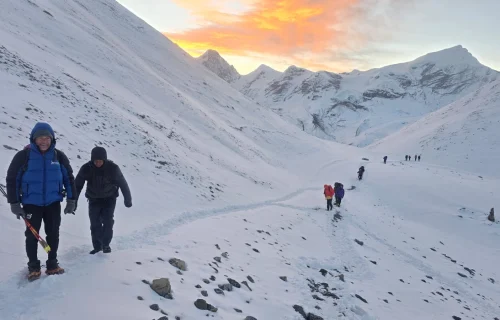
The 10-day route follows the classic Khumbu trail. You fly into Lukla, move through the Dudh Koshi valley, pass through living Sherpa villages, and summit-view from Kala Patthar before the descent. It’s the same trail. The same mountains. The same magic.
What’s different is the pace. Walking hours are a little longer each day. In addition, the acclimatization window is more compressed. That makes fitness and planning non-negotiable. It’s also why choosing an experienced local operator matters more on this version than on the longer one. A team like Himalayan Trip Nepal structures these schedules specifically around altitude safety not just logistics. That’s what separates a good experience from a risky one.
Day-by-Day Itinerary
Day 1 — Fly Kathmandu to Lukla (2,860m) → Phakding (2,610m)
You land in Lukla on one of the most dramatic airstrips in aviation. It’s a short mountain runway that never gets old. From there, the trail drops gently through pine-scented forest beside the Dudh Koshi River. Phakding is a gentle opener. Use this day to breathe, slow down, and let your eyes adjust to a world without city noise.
Day 2 — Phakding to Namche Bazaar (3,440m)
The trail earns its reputation today. After crossing a series of high suspension bridges yes, they sway you climb hard into Namche Bazaar. This is the capital of the Khumbu and the heartbeat of Sherpa culture. The ascent is steep. However, the reward is a mountain town full of warm lodges, fresh-baked goods, and a buzz that surprises most first-timers.
Day 3 — Acclimatization Day in Namche Bazaar
Do not skip this day. Experienced guides at Himalayan Trip Nepal will tell you the same thing rest days aren’t laziness, they’re strategy. Hike up toward the Everest View Hotel for a teaser of what’s ahead. Then visit the village of Khumjung and wander the weekend market. Eat well. Sleep early. Meanwhile, your body is adjusting to 3,440 meters without you even noticing.
Day 4 — Namche Bazaar to Tengboche (3,860m)
This is one of the most beautiful stretches of trekking anywhere on earth. The trail winds through rhododendron and juniper forest. Then it opens onto a ridgeline with unobstructed views of Ama Dablam. Finally, it delivers you to Tengboche Monastery — a place that quiets even the most restless minds. If you time it right, you’ll hear the monks chanting at dusk.
Day 5 — Tengboche to Dingboche (4,410m)
Alpine meadows replace the forests now. The vegetation thins and the sky feels closer. As a result, every turn in the trail reveals a new angle of the peaks surrounding you. Dingboche sits in a sheltered valley. It’s also the last place you’ll feel genuinely warm before the high-altitude push begins.
Day 6 — Dingboche to Lobuche (4,930m)
The landscape becomes lunar here — beautiful in a stark, unapologetic way. As you approach the Khumbu Glacier, you’ll pass stone cairns and memorial plaques for climbers who never came home. It’s a quietly powerful stretch of trail. Consequently, it puts everything — your sore legs, your packed schedule — into perspective.
Day 7 — Lobuche to Gorak Shep (5,164m) + Everest Base Camp (5,364m)
This is the day most trekkers have been building toward. A morning walk brings you to Gorak Shep. From there, you push out across the rubble moraine of the Khumbu Glacier to Base Camp itself. There are no sweeping summit views from here — just ice, wind, prayer flags, and the sheer scale of it all. Most people cry a little. That’s fine. Afterward, you return to Gorak Shep for the night.
Day 8 — Kala Patthar (5,545m) at Sunrise → Descend to Pheriche
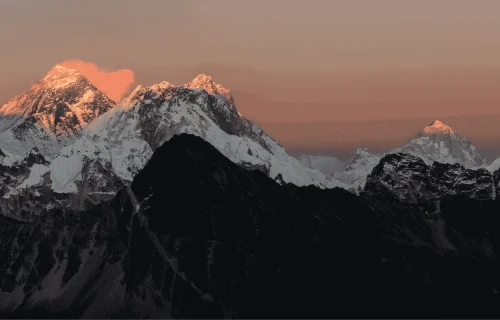
Set your alarm for 4am. The pre-dawn climb to Kala Patthar, with Everest glowing pink in the morning light, is the photograph most trekkers carry home. After soaking it in, you descend — lungs full, legs happy, heart genuinely full — to Pheriche for a proper night’s rest.
Day 9 — Descend to Namche Bazaar
The trail you worked so hard to climb now gives it all back. It’s a long, mostly downhill day. Nevertheless, your legs find a rhythm they didn’t know they had ten days ago. The familiar trail feels different in this direction — lighter, somehow.
Day 10 — Namche Bazaar to Lukla
The final stretch. Many Himalayan Trip Nepal groups end the evening in Lukla with a celebration dinner. Stories get traded over lemon honey tea. Fly out in the morning with dust on your boots and a perspective you didn’t have before.
Best Time to Go
Spring (March–May) brings rhododendron blooms and warming days. The trail bursts with color and the teahouses fill with travelers from every corner of the world.
Autumn (September–November) is peak season for a reason. Post-monsoon skies are impossibly clear, the light is golden, and Everest appears so sharp it almost looks artificial. As a result, most experienced trekkers rate October as the single best month on the entire route.
Both windows offer stable weather, reliable flights, and fully operational teahouses. Furthermore, Himalayan Trip Nepal runs fixed departure dates through both seasons — useful if you’re traveling solo and want to join a small group without sacrificing quality guiding.
What Does It Cost in 2026?
Breaking Down the Budget
A fully organized guided package typically runs between USD 1,050 and USD 1,350 per person. A well-priced package from a reputable operator like Himalayan Trip Nepal covers everything that matters: Lukla flights, teahouse accommodation, all meals, a licensed guide and porter, Sagarmatha National Park permits, and Kathmandu airport transfers.
Smaller private groups land closer to the higher end of that range. On the other hand, joining a shared departure can bring costs down to around USD 1,100 without compromising the experience.
What to Budget Separately
Budget additionally for travel insurance — non-negotiable, and it must specifically cover high-altitude trekking. Beyond that, set aside funds for guide and porter tips, personal snacks, hot showers, and the occasional Wi-Fi connection.
Practical Tips That Actually Matter
Train Before You Arrive
Train before you go. Hill walks, stair sessions, and loaded pack hikes all build leg strength and cardiovascular endurance. They will repay themselves a hundredfold on the trail. You don’t need to be an athlete. However, you do need to be honest with yourself about your baseline fitness level.
Pack Smart, Not Heavy
Pack light and pack right. A quality down jacket, waterproof trekking boots that are already broken in, trekking poles, and a warm sleeping bag are not optional at these elevations. They’re the difference between suffering and thriving.
Listen to Your Body and Your Guide
Hydrate constantly. Walk slower than you think you need to. If altitude symptoms show up headache, nausea, disorientation tell your guide immediately. Himalayan Trip Nepal‘s guides carry pulse oximeters and are trained in altitude response. That’s not a marketing point. It’s genuinely what separates a responsible operator from a cheap one.
Slow Down in the Villages
Finally, don’t rush through the cultural moments. Buy tea from the elderly woman running the small stall. Let the monastery at Tengboche do what it’s supposed to do to you. The mountains are the draw, but the Sherpa people and their culture are the soul of this trek.
Is 10 Days Enough?
For the right person? Absolutely. If you’re reasonably fit, prepare properly, and travel with a team that knows the mountain — yes, ten days is enough. It’s enough to have one of the most genuinely life-affecting experiences available to anyone on this planet.
Travelers who’ve done it through Himalayan Trip Nepal consistently say the same thing: they came back different. Not just tired. Different.
That’s worth ten days of anyone’s year.
What Himalayan Offer in the Everest Region
Everest Base Camp Trek
- Duration: 11 Days
- Highlights: Classic Everest route, iconic Himalayan views
- Starting Price: $1,590 per person
Everest Panorama Trek
- Duration: 11 Days
- Highlights: Lower-altitude trek with close views of Everest & Ama Dablam
- Starting Price: $1,340 per person
Get in Touch The Mountains Are Waiting
- 📍 Office: Lazimpat, Kathmandu, Nepal
- 📞 Phone / WhatsApp / Viber: +977-9851090345
- 📧 Email: info@himalayantripnepal.com
- 🌐 Website: www.himalayantripnepal.com
Booking is instant and secured. Simply describe your dates, group size, fitness level, and budget. Their team responds quickly with a practical plan no pressure, no upselling. Just honest advice from people who know these mountains the way most of us know our own neighborhoods.
Planning a trip in Nepal?
Explore curated trekking and tour packages, or customize your own itinerary.
Explore TripsCustomize Trip

